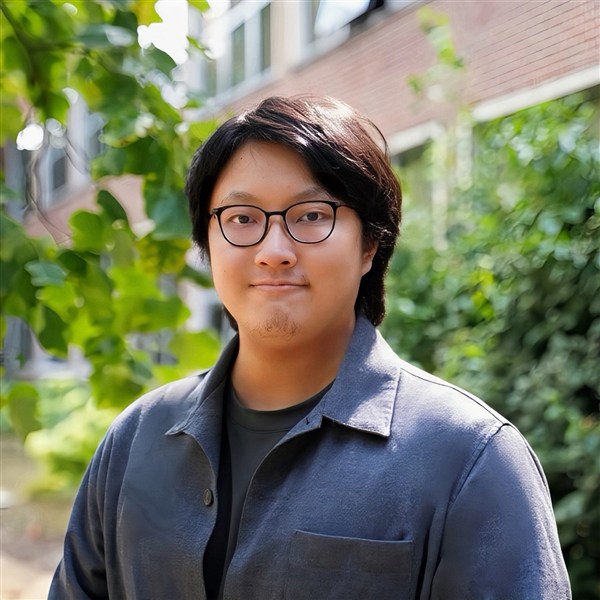
Hi, I’m Tyler! Welcome to my website.
I am a Ph.D. candidate in Political Science and Scientific Computing at the University of Michigan, where I am also completing an M.A. in Statistics. I study the relationship between political parties and the populations beneath them. Party systems stand on social groups, and I ask what happens when the groups move. My work combines comparative politics, with a focus on dominant parties and communal politics in Southeast and East Asia, and political methodology, with a focus on ecological inference. I read my cases in Chinese, Malay, and Indonesian.
My dissertation, “Moving Ground: Three Papers on Elites, Voters, and the Breakdown of Dominant Party Systems,” asks how parties that dominated their countries’ politics for decades lose the ability to dominate. Breakdown, I argue, takes two forces meeting. Populations shift beneath the party, and defecting elites attach their new vehicles to the ground that has moved. One paper shows the ground moving in Malaysia, where urbanization dissolved the brokered ties binding Chinese voters to the ruling coalition while the constitutionally entitled Malay base held. A second follows 4,638 candidate-elections across Malaysia’s UMNO, Japan’s LDP, and Taiwan’s KMT to show that defection ends dominance only when a breakaway party captures a social cleavage the parent cannot absorb. A third builds BACH, a simulation-based ecological-inference framework that recovers how each demographic subgroup votes from aggregate election returns, and finds that national origin rather than education organizes Hispanic vote choice in Florida.
The plan is for the dissertation to grow into a book, “The Tower of Babel We Bury.” The dissertation takes the groups as given and shows how their movement breaks parties. The book asks where the groups came from. Parties do not merely mobilize social groups. They make them, and campaigning on a made group means burying the differences inside it. The book follows buried difference from its colonial origins to its resurfacing across Malaysia, Taiwan, and the United States. My fieldwork runs from the Malay neighborhoods of Kuala Lumpur and the coastal villages of Terengganu to the Detroit suburbs and New York City’s three Chinatowns.
My research appears in the Journal of East Asian Studies and, with Congcong Fu, in the two leading Chinese-language journals of Southeast Asian studies. Three further papers are under review. I study what happens when the ground beneath a party shifts, and I build the instruments to measure it.
My papers, datasets, and CV are linked above.
I am on the 2026–27 academic job market.
Outside the academy, I am the dad of two black cats, Erik and Theda, and a volunteer foster with the Humane Society of Huron Valley.